
Dutch tax calculator 2026: estimate your net salary, tax credits and the 30% ruling. See a €50,000 example. Free guide for expats. If you want to know what lands in your bank account each month in the Netherlands, a Dutch tax calculator gives you the answer in seconds. It takes your gross salary, applies the 2026 tax brackets, subtracts your tax credits and shows your net pay. This guide explains each step so you can understand the result and not just read a number.
Quick Answer
dutch tax calculator 2026 A Dutch tax calculator works out three things: your income tax before credits, the tax credits you receive, and your final tax bill. Your net salary is your gross salary minus that final bill. For 2026, Box 1 rates are 35.75% up to €38,883, 37.56% up to €78,426, and 49.50% above that.
How Does a Dutch Tax Calculator Work?
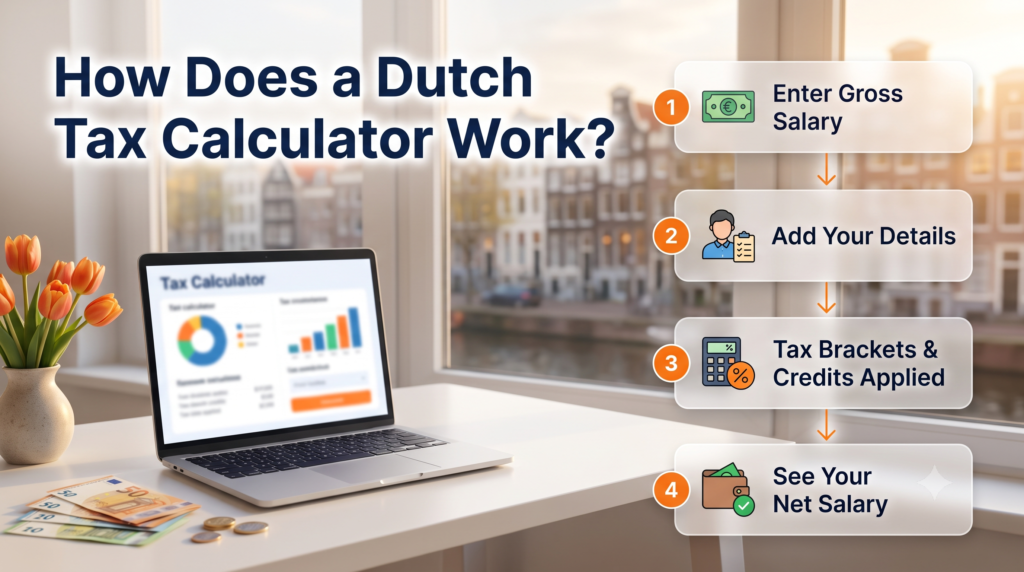
The calculator follows the same logic as the Dutch Tax Administration, called the Belastingdienst. It does four things in order:
- Takes your gross annual income as the starting point.
- Splits that income across the three Box 1 brackets.
- Applies the matching rate to each slice.
- Subtracts your tax credits to reach the final tax bill.
The result is an estimate. It is accurate enough for budgeting, comparing job offers and planning a move, but only your official assessment is final.
2026 Dutch Income Tax Brackets
Box 1 covers income from work, pensions and a home you live in. Rates apply to each slice, not to your whole income:
| Income slice | Tax rate | What it means |
| Up to €38,883 | 35.75% | First slice, includes national insurance |
| €38,883 to €78,426 | 37.56% | Middle slice of your income |
| Above €78,426 | 49.50% | Only the part above this limit |
Source: Belastingdienst, 2026 Box 1 rates.
The first rate includes national insurance contributions for people below state pension age. This is why it looks high compared with other countries.
Understanding Your Tax Credits
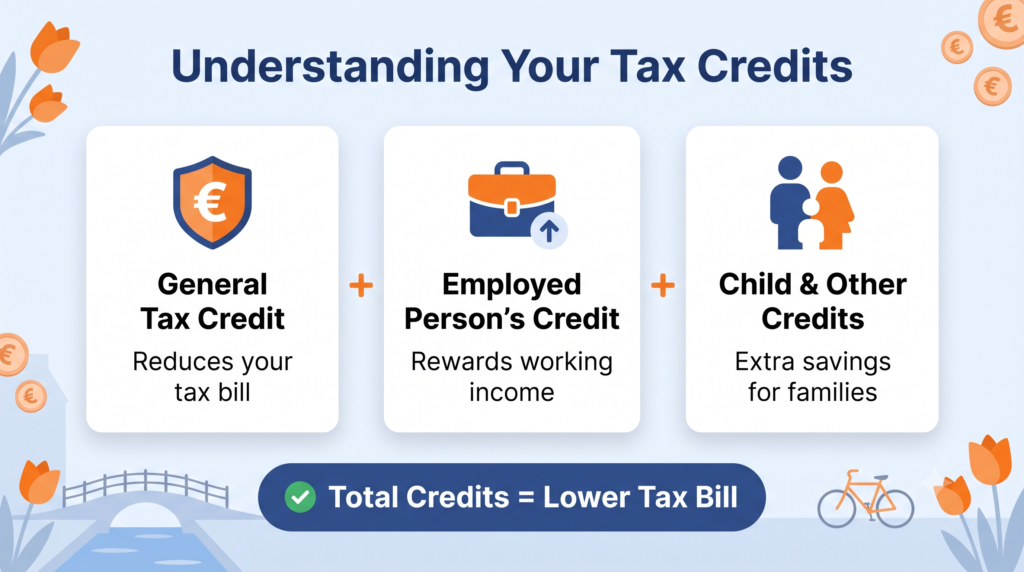
Tax credits are what make Dutch tax bills smaller than the raw bracket math suggests. Two credits matter most for employees.
The general tax credit (algemene heffingskorting) goes to most residents. It is highest at lower incomes and shrinks as earnings rise.
The labour tax credit (arbeidskorting) rewards people who work. It increases as you earn more up to a point, then declines at higher incomes.
Because both credits change with your exact income, a calculator saves you from complicated manual formulas. Check the current credit amounts with the Belastingdienst before making a financial decision.
Worked Example: €60,000 Gross Salary
Here is how a calculator treats a €60,000 salary:
- The first €38,883 is taxed at 35.75%, which is about €13,901.
- The remaining €21,117 is taxed at 37.56%, which is about €7,932.
- Tax before credits is about €21,832.
- The general tax credit and labour tax credit are subtracted, which reduces this amount.
Your final net salary depends on the credits you qualify for, so enter your own figures into a calculator for the exact result.
How to Get the Most Accurate Result
Small input mistakes change the outcome. Follow these tips:
- Enter your gross yearly salary, not your monthly net pay.
- Confirm whether your salary includes holiday allowance.
- Pick the correct tax year, as brackets and credits change annually.
- Include the 30% ruling only if your employer has confirmed it.
- Add homeownership or mortgage details if they apply to you.
What About the 30% Ruling and Freelancers?
The 30% ruling is a benefit for expats recruited from abroad. It lets an employer pay up to 30% of gross salary tax free, which raises your net income. Eligibility depends on salary level, recruitment from abroad and skills, so verify current rules before relying on it.
Freelancers, known as ZZP workers, pay tax on profit instead of revenue. They may use deductions such as the self employed deduction and must also handle VAT, called BTW. A calculator with a freelancer mode helps you plan how much to set aside.
Frequently Asked Questions
How is Dutch net salary calculated?
Take your gross salary, subtract income tax calculated across the brackets, then add back your tax credits.
Is a Dutch tax calculator accurate?
It is a reliable estimate based on official rates, but it cannot replace your final assessment from the Belastingdienst.
Do I pay 49.50% on all my income?
No. That rate applies only to the portion of income above €78,426.
Do tax credits apply automatically?
Employees usually receive them through payroll tax, and you can claim any missing amounts when you file your return.
Final Thoughts
A Dutch tax calculator turns a confusing system into a clear estimate. Once you understand brackets, credits and special rules, you can read any result with confidence. Use it to plan your budget, then speak to a qualified Dutch tax advisor for important decisions.

John Keller is the founder of Look Forward Administratie & Advies and a Dutch financial administration and tax advisory specialist. With 25 years of experience helping expats, freelancers, and businesses navigate Dutch payroll, income tax, and the 30% ruling, he combines hands-on advisory experience with a focus on making Dutch tax rules understandable for non-Dutch speakers.